ho coperto “NotebookLM” così non rompete.
Puoi chiamarlo come vuoi, ma esiste un solo Dio: quello che conta veramente è che il cambio sia favorevole. Valore di costo, valore di scambio, valore percepito.
Ci si domanda perché i ricchi sono sempre più ricchi. Ma presteresti dei soldi a chi guadagna poco? A chi fa valere poco il proprio valore negli scambi? Oppure li daresti a chi “se la tira”? Chi se la tira si fa pagare meglio, i soldi che ti chiede in prestito te li ridà prima. Forse va a farci una guerra o a divertirsi in qualche modo poco simpatico, forse ride solo lui. Ma onora il debito.
L’unica speranza per chi annaspa è quella di aumentare i tassi, promettere di più, alzare la posta, come si fa in un tavolo da poker.
Ma il banco vince sempre.
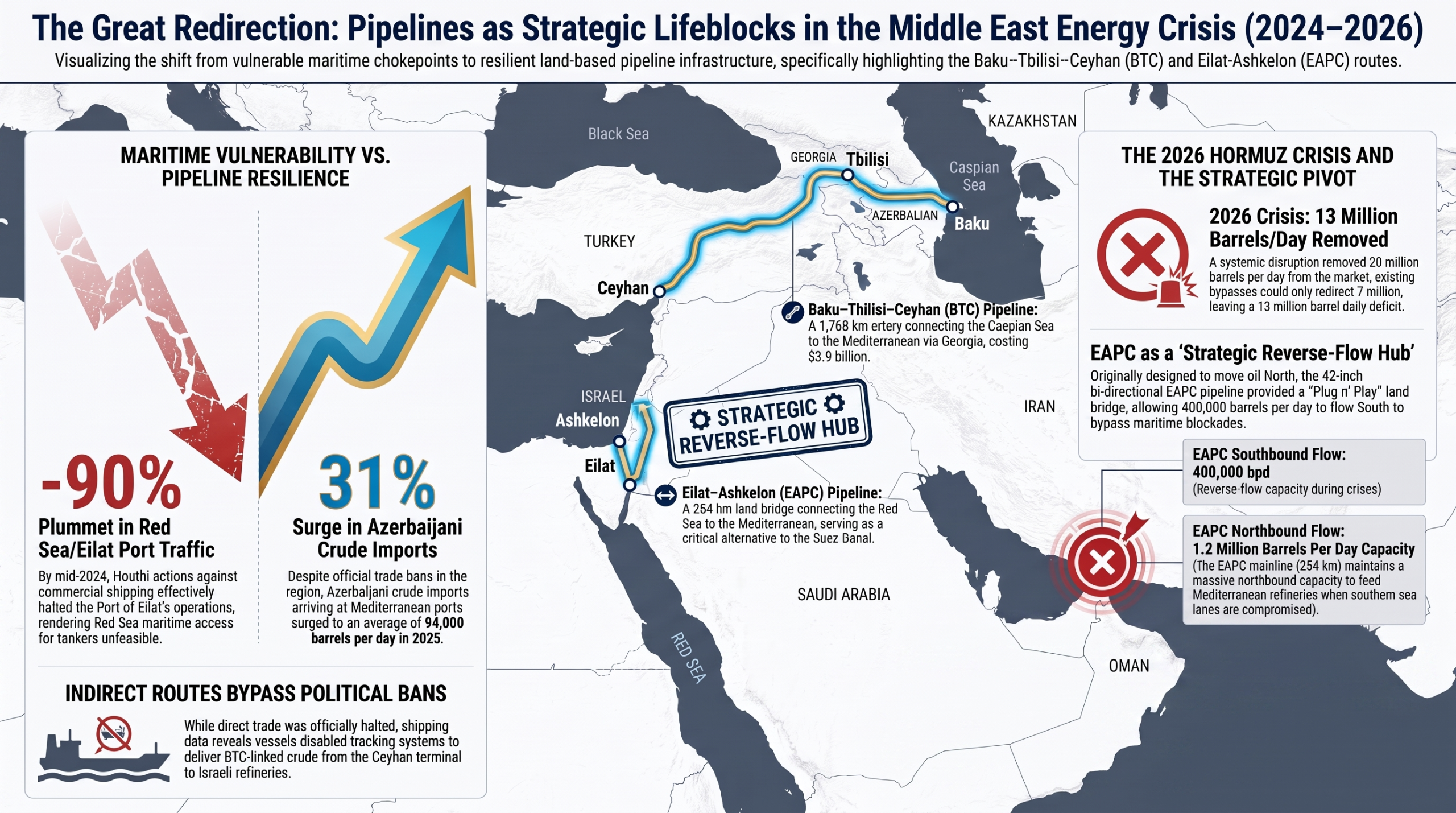
Several key financial drivers, strategic valuations, and trade surges that have contributed to Israel’s economic and energy positioning:
Strategic Energy Agreements: A landmark memorandum of understanding (MOU) between the state-owned Europe Asia Pipeline Company (EAPC) and the UAE-linked MED-RED Land Bridge is valued at an estimated $700 million to $800 million over a 10-year period
* This agreement focuses on using the Eilat-Ashkelon pipeline for the storage and transfer of oil, potentially capturing 12% to 17% of the oil business traditionally handled by the Suez Canal
* Surge in Energy Imports: In 2025, Israeli imports of Azerbaijani crude oil—which accounts for 46.4% of its total oil imports—surged by 31%, reaching an average of 94,000 barrels per day
* Historically, oil imports from Azerbaijan have been a massive component of bilateral trade, valued at approximately $3.5 billion as far back as 2008
* Transit Fee Revenue: The Israeli pipeline system generates revenue through transit fees. For example, previous agreements for transporting Russian crude oil through the network were cited at approximately 10 cents per barrel
* Strategic Hub Valuation: The 2026 Hormuz crisis, which removed roughly 13 million barrels per day from the global market, positioned Israel’s infrastructure as a vital node for the India-Middle East-Europe Economic Corridor (IMEC)
* The sources suggest that leveraging existing Israeli storage and transshipment capacity for Gulf-origin products is a primary recommendation for regional resilience, though the exact added wealth from this role is still being assessed through pilot phases
* Broader Trade Growth: Outside the energy sector, Israeli exports to partners like Azerbaijan have shown record-breaking growth, reaching $128.9 million in 2008, a 56.4% increase over the previous year
* Key exports include medical equipment, telecommunications infrastructure, and high-tech agricultural solutions, such as advanced irrigation and strawberry-growing technologies
While these specific figures highlight significant revenue streams and growth in trade sectors, the sources emphasize that much of the “wealth” gained is also strategic, providing Israel with enhanced energy security and a role as a “Plug n’ Play” land bridge between the Red Sea and the Mediterranean
https://notebooklm.google.com/notebook/a483b245-f46b-4998-b928-a587dd76a895
Lascia un commento